Category: Self-Care

  • Getting Perspective

    Getting Perspective

    My dear cousin posted a question on FB yesterday: “Looking for inspiration! What are your best/current mantras to keep pushing through the craziness of this year?” My answer:

    “I will look back on this time. When I do, what do I want to see?”
    – Uncommon Julie, 2020 AD

    Perspective-taking has been a weird talent of mine since I was little. I naturally slip into imagining “later” and look back at the current problem or situation from that point of view.

    Pros: Reduces angst, establishes a goal-oriented, “end in mind” problem solving approach.

    Cons: Can suppress (aka: “stuff”) emotion: sort of a “since we’ll get over it eventually, why be mad/upset/hurt now?” mindset which can be growth- and purpose-stunting in the long term.

    Regarding the incessant horrors of 2020, I know that we will, at some point, be through this. We will, in that future, look back at this time and see how it unfolded – the good, the bad and the ugly.

    We have done this time and time again in our lives – faced untenable circumstances. Each time, we’ve gotten through and looked back. Indeed, billions of people living and dead have faced untenable circumstances over hundreds of thousands of years and gotten through and looked back.

    “As I look back on that time, I remember so vividly being terrorized by that saber-toothed mammoth rex.”
    – Grog, 200,201 BC

    Perspective provides immediate relief as it transforms the frenetic, myopic urgency into farther-sighted space for intention. It allows us to see our choices not as black and white, frying pan and fire, pot and kettle but more broadly in terms of the values by which we want to have lived regardless of outcome.

    “As I look back on that time, I’m glad I helped Grog sharpen her spear so that she could save us from that saber-toothed mammoth rex.”
    Grog’s Neighbor, 200,201 BC

    Perspective also allows us to see that we are not a bottomless resource in and of ourselves and that in order to be there later to look back, we may need to take time and space to just be. This is self-care. It’s getting sleep, eating nutritious food, having fun, taking a break, having a cry, beating your pillow, screaming into the wind, doing nothing at all.

    “As I look back on that time, I wish my mom had taken a much deserved break after saving us from that saber-toothed mammoth rex. She’s not herself any more and I miss her smile.”
    – Grog’s Son, 200,201 BC

    One thread in the tapestry doesn’t make that much of a difference when the tapestry is taken as a whole. Honestly, none of us in 2020 AD can say we knew Grog. But we know she was brave and we know her neighbor valued collaboration and those qualities and values mattered in the long run. Perspective affords you the confidence to live by your values.

    And while one thread may not matter that much, we know that if that one thread is stretched to breaking, it can compromise the integrity, the soundness, the strength of the whole. We may not feel the impact of Grog’s lack of self-care but we know it mattered to Grog’s son and so it matters to the whole. Perspective affords you the right to self-care so that you can continue to contribute your best to your world.

    UPschool - Strategic Leadership Development for Human Resource management & people managers.
    Learn more about becoming a member of UPschoolhttps://bit.ly/3eeJdDo
  • An Antidote to the Sunday Scaries

    An Antidote to the Sunday Scaries

    This article talks about how the Sunday Scaries is a phenomenon unique to our more modern work style. As the article points out, while Sunday night blues might have always been a thing, the nature of this new version seems to kick it up a notch. I agree and I have some ideas for what to do about it.

    What’s Scary?

    In trying to answer why Sunday might be so scary, we can look to the brain. We know that if we are scared, we are in threat response. If we are in threat response, we are responding to a perceived threat. So what is threatening about Sunday? A simple diagnosis can be made using Dr. David Rock’s SCARF model:

    • Status – A lack of status or lower status triggers threat response
    • Certainty – Lack of certainty triggers threat response
    • Autonomy – Lack of choice triggers threat response
    • Relation – Lack of belonging triggers threat response
    • Fairness – Lack of fairness triggers threat response

    Right off, Certainty, Autonomy and Fairness jump out at me as the major triggers at play relative to the Sunday Scaries. Certainty: Given the ambiguity of today’s work world, we don’t know what’s going to happen on Monday and whether we’ll be ready for it. Autonomy: We don’t have a choice. Ready or not, we have to show up on Monday. Fairness: We expect a full weekend to relax and when it’s taken up by mundane errand-running or being in touch with work 24/7 or catching up on to-do’s it can feel unfair.

    So what can we do?

    We can lower that threat level by taking action. We have the power to become aware of our energy level, what’s dragging it down and what to do about it. If you regularly get a case of the scaries, here are a few ideas to try:

    Plan ahead

    Before the next weekend comes, decide what you really would like to fit in that would make a difference, schedule it, commit to it and – here’s the key – be mindful of it as you do it. This could be as small as enjoying a whole cup of coffee in silence Saturday morning. The idea is to be thoughtful about what makes a weekend for you and to make sure you build that aspect in.

    Prepare

    • On Sunday, afternoon or evening – preferably at a time scheduled before the scaries typically have you in their grip – take a half an hour or so to listen to a guided meditation from insight timer (or your favorite guided meditation source). Select a meditation that fits – calm, confidence, stress reduction, anxiety relief – to help your brain relax and refocus.

    Be Purposeful

    Remember that while you may HAVE to go to work the next day, you also GET to. Shifting your frame of mind from a lack of choice (have to) to a full portfolio of choice (get to) can make a world of difference. Write down at least 5 things you GET to do at work that you enjoy or can look forward to such as interacting with colleagues, solving problems, being creative or pitching ideas.

    And if you’re REALLY dreading Monday mornings, perhaps it’s time to reflect on what’s working and what’s not so that you an begin to shape work and life for yourself that is meaningful and gratifying and Sunday Celebration worthy!

    Recharge and regain some motivation in this free webinar. Click here to register: https://bit.ly/3g4dAhxhttps://bit.ly/3g4dAhx
    UPschool - Strategic Leadership Development for Human Resource management & people managers.
    Learn more about becoming a member of UPschoolhttps://bit.ly/3eeJdDo
  • Just Breathe (and maybe do this too) HR Self-Care

    Just Breathe (and maybe do this too) HR Self-Care

    I recently downloaded and am using Aaptiv – an app that provides tracking, encouragement and ideas for making exercise a habit. I’m loving it and especially enjoying the guided exercises and meditations from one of the Aaptiv coaches, Ceasar.

    This morning I chose a walking meditation, led by Ceasar, called Walking Relief and focused on stress reduction. Ceasar’s style this morning was more like a chat than a meditation with some energetic encouragement about walking with good form, a bit of empathy for the stress we all experience and an introduction of breathing techniques we could use when in the thick of it.

    During our walk, he mentioned that a lot of people had written in asking for tips on how to stay calm and not react when faced with a stressful situation. It seemed that more often than not the request was for help dealing with the stress reaction caused by another person – family member, partner, colleague, etc.

    Just Breathe

    Ceasar’s suggestion for these moments was to employ the breathing techniques. I’ll share them here as they are both good ones and very useful for meditation and relaxation:

    Cooling Breath – Shape your lips as if you were sipping from a straw and draw in a breath for 5 beats. It should feel cool and sharp over your tongue. Hold it at the top for 3 beats and exhale for 8.

    Alternating Nostril Breath – This is a breathing technique I’ve seen used in yoga classes and it usually involves pressing the left nostril closed gently while inhaling through the right one and then pressing the right nostril closed and exhaling through the left one. In this case, he led us through the technique by just imagining the air passing in through one and out through the other (Look, Ma! No hands!). This took a good deal of concentration and definitely served to keep my mind occupied.

    Each technique can serve really well for de-stressing. The first would definitely seem appropriate for avoiding a sharp reaction to a stressor. The alternate nostril breath on the other hand I have to say I’m not totally sold on. Since it would seem awkward to either start pressing alternately on your nose or to suddenly go still and somewhat cross-eyed attempting to imagine the alternation of nostril breaths in the heat of the moment. Further, for those of you in colder climates, imagine walking at a good clip, in New England, in February, for about 20 minutes when you’re asked to breathe only through your nose and one nostril at a time. Those of you in warmer climes may not be aware that the only thing we New Englanders are doing with our nose while walking briskly in the cold winter air is dabbing it with a Kleenex.

    Anyhoo.

    Maybe Try This Too

    The breathing is a great start. But I’m concerned that when we are facing a stressful colleague, a sharp rebuke or an unhappy surprise and we want to prevent ourselves from freaking out (I mean “reacting”), that breathing is just not gonna cut it alone. Therefore, I have two additional suggestions:

    Diffuse the trigger

    When in the heat of the moment you may have a friend, colleague or partner blaming you or interrupting you or walking off in a huff before the conversation is over. But instead of taking those actions personally and at face value, remind yourself that – as Helle Bundgaard writes in her book The Motivated Brain – our behaviors are a strategy for getting our needs met. What this means is that when someone is blaming you, they may want to feel better about their own part in the problem. When someone interrupts, they may need to be heard. When someone walks off in a huff they may need to regain some sense of control. Now I’m not saying these behaviors are right. I’m just saying that they are less about you and much much much more likely to be about them. Remember this, use the Cooling Breath technique and let tempers cool along with you.

    Choose yourself

    As we just noted, some of these behaviors are not awesome and not ok. Remember you always have choice regarding how, where and with whom you spend your time. In these moments or shortly after they happen, step back and take an inventory – what do you expect should be happening? How is this situation impacting you? And then ask yourself, what do you want instead? Is it to feel confident in your contribution? Is it to feel respected and valued? Is it to achieve some peace of mind? Brainstorm ways you could accomplish those end goals. Choose the healthy and growth-oriented path. Get help if you need it. But always, choose yourself.

    Stress and triggers will always be a part of life. When we practice self-care and assertive communication and when we remind ourselves to let go of others’ hang ups and focus on our own needs – remarkably, we – and those we love the most – start to grow and flourish beyond that stress and rise above those triggers. Not all the time. But more of the time.

    If you are a human resource management professional or people manager interested in learning more about HR self-care, consider joining UPschool. As an UPschool member you have access to programs, workshops, tools, templates and expert guidance/coaching that promotes self-efficacy, uncovers your unique motivation factors and helps you to ignite your motivation & unlock your best capabilities.

  • HR Burnout Sucks

    HR Burnout Sucks

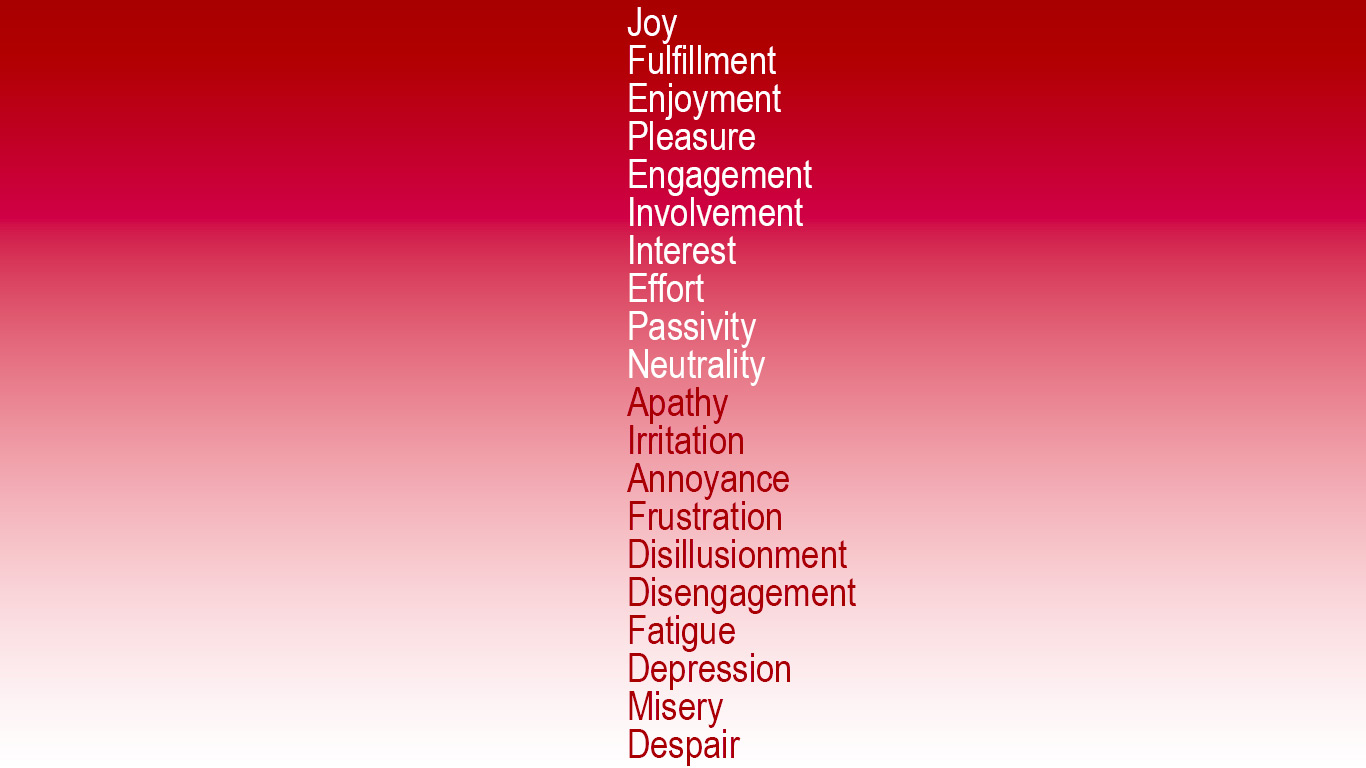
    The Burnout Thermometer

    I once drained myself of mental, physical and emotional energy to nearly the point of no return as a result of my attempts to positively influence the negative effects of business on humans.

    This is What I Learned:

    1. They don’t give out medals for that.
    2. The signs were there WAY before I started noticing them.
    3. I was the only one who was in a position to notice those early signs.
    4. It is easy to ignore the signs.
    5. It is easy to muscle through.
    6. Being busy and overwrought is a badge of honor in some cultures.
    7. It is hard to let go of the notion that I can’t change other people or circumstances.
    8. I am not as critical to things working out as I think I am.
    9. There are hundreds of thousands of organization running successfully without my help.
    10. When people tell me it’s ok to rest, I can take them at their word.
    11. When I think I need to rest, I can take myself at my word.
    12. Self care is not stupid.
    13. Getting good sleep, eating right and exercising is boring but necessary.
    14. I have way more energy and potential than is generally asked of me to expend.
    15. I am the only one who is in a position to recognize that potential and engage that energy.
    16. There are way more options available to me than I often acknowledge.
    17. Living to my potential takes discipline and hard work.
    18. It’s no one’s job but mine to make the changes necessary in order to thrive.
    19. Change is hard.

    Take Your HR Burnout Temperature

    Take a moment to take your burnout temperature. Are you feverish with joy or chilled with despair? Somewhere in between? If so, which direction are you headed in and how can you ensure you’re getting warmer? Because, like high blood pressure, diabetes, obesity and heart disease, burnout is a lifestyle disease: entirely preventable, reversible with early intervention and potentially deadly. It literally sucks the life out of you.

    Ask Yourself:

    • Where am I on the burnout thermometer?
    • What actions can I take to reduce stressors in my work and life?
    • What do I love to work on or play at and how can I add some of those activities to my days?
    • What one change would make the biggest positive difference? What small step toward that change could I make?

    Choose to Thrive

    Take this important step. Access your own HR network, your Employee Assistance Program, your health provider or close friends or family for help if needed. You are the only one who can decide that it’s worth the effort to make the changes you need to thrive. But you are worth the effort and it’s nicer on the other side.

    Feel better. Get stronger. Thrive.

    If you would like to learn more ways to support your HR career consider joining UPschool. UPschool is an online platform that allows access to programs, workshops, expert guidance, tools and templates to human resource management professionals offering them support, guidance and leadership development.

  • HR is Not for Helpers

    HR is Not for Helpers

    I’ve always jokingly said that if an applicant comes even remotely close to saying they are interested in the field of HR because they enjoy helping people then the interview is over right then and there – do not pass go, do not collect 200 dollars and watch out for that screen door, it’s a doozy!

    But it’s not entirely a joke. HR is not for helpers. HR is a fine role for helping and for the helpful but it will take down, gobble up, chew and spit out a dyed-in-the-wool helper every time. There are a few reasons for this but first, let me be clear about what I mean by “helper”.

    “Helper” Defined

    A helper is someone who is inherently motivated to help, aid, assist another person. By giving this assistance, the helper feels energized. When thanked for the assistance, the helper feels fulfilled. When returned to for additional aid, the helper feels validated. A helper can’t help but help. But a helper also expects their help to be recognized as actually having helped. That’s the key: A helper requires acknowledgment or evidence from others. If you recognize yourself in this description and you hold a job in HR, fear not – there is help!

    Let’s first understand why HR is not the place for a helper.

    Why HR is Not the Place for a Helper

    Helpers Gonna Help

    While I expect my HR teams to be helpful, I am also expecting that we are building capability and capacity in the organization and often that is not achieved by “helping”. For example, employees need to learn to self-serve through technology rather than have HR help them find an accessible resource. Managers need to demonstrate strong management practices rather than have HR help deliver a difficult message. Colleagues need to be held accountable for resolving conflicts directly rather than having HR help smooth tensions over. Sometimes helpers – by helping ease the short term pain – are actually preventing us from achieving long term goals.

    Happy is Not the Goal

    Our job in HR is not to make people happy. We may, in the course of our work, end up with happy people and that’s great but HR’s job is to do good HR regardless of whether it makes people happy or not. In fact, as we know, doing good HR sometimes means that some people will end up quite UN-happy. This can be extremely stressful for the helper as it takes away the positive acknowledgment perceived as so vital to the helper’s wellbeing.

    Saying “No” Hurts the Helper’s Heart

    “I couldn’t help. They are not helped. I have failed.”

    Being Unable Hurts the Helper’s Heart

    “They came with a problem. I wasn’t able to solve their problem. I have failed.”

    So what can helpers do?

    Are we (ahem…I mean they) doomed? Take heart! There is both hope and help. Here are some options:

    Helpers Can Leave

    If your heart is hurt more often than not and you don’t see a way through, another field which better leverages your strengths could be a much more fulfilling match. A site called O*Net Online is a great resource for uncovering new and different roles that match your skillsets.

    Helpers Can Help Themselves

    Often the helper is the last person on the helper’s to-be-helped list. Self-care is a particularly challenging concept for the helper as it doesn’t come easy to us (I mean them). In fact, it can be so unfamiliar that it can feel selfish and wrong. But like the flight attendants remind us, we must put the oxygen mask on ourselves before attempting to help others and though this may be one of the most difficult hurdles to overcome, the helper can learn to become self-fulfilled and self-validated. Therapy can work wonders in this effort. Programs like A Course in Miracles can be life-changing. Understanding your motivation factors can provide great insight and a path forward.

    Helpers Can Re-define “Helping”

    The Coaching Habit is an excellent resource for those who strive to make a difference in people’s lives but who want also to not be enmeshed with other’s issues. This book turns out to be an excellent self-help for helpers.

    So, fellow helpers, all is not lost and we can be in HR. We just need to be purposeful about our helping. Consider choosing one of the paths above. Why?

    • to meet both the short and long term expectations of your leaders
    • to preserve your energy and the important contribution you make to people and the business every day.
    • and to become happier and more fulfilled

    That’s why.

    If you are interested in learning your motivation factors consider joining UPschool. As an UPschool member you have access to the What Drives You? Program that uncovers your unique motivation factors, helping you to ignite your motivation & unlock your best capabilities.

  • Addicted to Crazy

    Addicted to Crazy

    A day in the life of many an HR Pro is comprised of a full calendar, full to-do list, full agenda and full bladder. Rushing from meeting to interview, from conversation to conflict and from problem to policy – the hair-on-fire pace, the dizzying diversity of tasks and the constant “hey do you have a minute?” is just….HEAVENLY, isn’t it? The blood pumping, the adrenaline flowing, and your head buzzing with i’s and t’s to be dotted and crossed and double-checked for accuracy just makes us feel so ALIVE!

    And if there’s a break in the madness it’s a chance to reflect on how MUCH everyone needs and how LITTLE anyone listens and how DANGEROUS it would have been if they hadn’t consulted us and how NUTS of them to think that THAT was the right way to handle it. What would they do without us? What would have happened had we missed that meeting?

    Of course we skip lunch and skip the bathroom to make the call to skip the school play as we skip-run down the hall to make the meeting in time. Time? Who has time? We’re busy and we like it because we’re making an impact and we’re needed and there’s someone else in the doorway so that other thing will need to wait.

    Then the to-do’s don’t get to-done so the kids and you do homework till it’s dinner and then after. And when your partner asks a question as you send just one more email and you answer hours later but they’ve already gone to bed. Good news! A few more guilt-free hours to just catch up on all the work but in the morning there’s your partner, with that look – the one you dread.

    If this cadence sounds even remotely familiar, then you may be suffering from an addiction to Crazy and it is imperative that you take stock: How sustainable is this pace? What are the benefits of continuing it? What are the unintended consequences? What is the short term and long term impact of overriding your own professional and personal time with unplanned problem solving on behalf of others? What is your plan for ensuring that you as a professional and HR as a function is seen as a respected, strategic contributor to the business? How are you keeping yourself accountable to that plan?

    Crazy can be breathtaking and exhilarating and energizing. But it takes more than it gives. Crazy keeps you from realizing your vision. Crazy prevents you from spending quality time with people who matter. Crazy steals creativity and patience. It diminishes wellbeing and makes you late for yoga. It’s time to kick Crazy to the curb.

    One way to start kicking the Crazy habit is to set aside some time (this will sound crazy in and of itself to the addicted). Once the time – say an hour – is set aside, defend that time against interruptions and overrides; defend it with your professional LIFE. During that time, consider the questions above and write down the answers as honestly as you are able. Sit quietly for at least 5 minutes – 10 if you can manage it – to reflect on your answers. Then ask yourself, what one (tiny) action will you commit to that would make the biggest positive difference?

    This one (precious) hour will bring you back in touch with your vision for yourself – your life and work. It will reconnect you to what matters most. It can spark creativity and replenish patience. And, if you do it right, you might even make it in time for yoga.

    If you would like to learn more ways to stop the crazy addiction, consider joining UPschool. UPschool is an online platform that allows access to programs, workshops, expert guidance, tools and templates to human resource management professionals offering them support, guidance and leadership development.